Light, fatigue, and concentration: understanding what gets in the way
Intensity, glare, contrast, flicker, screens, and the direction of a light source affect visual comfort. Comparing settings helps you find a useful adjustment.
Everyday visual demands
Distinguish intensity, contrast, visual fatigue, sleep, and overload before choosing an adjustment.
Short answer: light can cause eye discomfort and divert attention
Light that is too intense, in the field of vision, reflected on a screen, or highly contrasted can increase discomfort and visual effort. Flicker, even when barely noticeable, or long periods without changing viewing distance can also matter. Some attention is then used to manage discomfort instead of remaining available for reading, working, or following a conversation.
The effect depends on the source, activity, duration, time of day, and current state. There is therefore no ideal setting for everyone. The most useful approach is to identify the parameter involved, change it alone, then compare comfort, concentration, and fatigue in a similar situation.
Intensity, reflections, contrast, and flicker: four different problems
Intensity describes the amount of light received. Glare occurs when a source or very bright area dominates the visual field. A reflection creates unwanted light on a screen, window, or glossy surface. Flicker is a rapid variation in light, sometimes invisible but potentially perceived as instability or discomfort.
These parameters can combine without producing the same effect. Dimming all the light does not necessarily correct a reflection; it may even increase the contrast between the screen and room. Precisely identifying “the lamp in my line of sight,” “the window behind the screen,” or “discomfort after forty minutes” leads to a more relevant trial than a general label of hypersensitivity.
Why concentration may decrease
Reflections, peripheral movement, notifications, windows, and contrast attract visual attention. Attention needs to select useful information and filter the rest. When the task is complex, sleep is insufficient, or other demands are already present, this selection can become more demanding. Available reviews show that lighting effects on attention vary particularly with intensity, time of day, task, and comparison conditions (systematic review of light and cognitive functions).
This page focuses on the lighting environment. The guide Attention and concentration more broadly explains why attention varies with interest, interruptions, load, and context.
Visual discomfort, general fatigue, or attention difficulty?
Visual discomfort often comes with squinting, burning, dryness, less clear vision, an urge to look away, or discomfort around the eyes. General fatigue more broadly affects energy available across several activities. An attention difficulty can persist in a visually comfortable environment and also involve organization, resuming tasks, or maintaining the goal.
These experiences can coexist. A short night sometimes makes screens and contrast harder to tolerate; a noisy place adds filtering demands. The guide Why noise tires me out helps compare the auditory component, while the guide to highly stimulating places addresses the simultaneous accumulation of several demands.
Screens, paper, and travel: compare genuinely different situations
On a screen, its own brightness, contrast, text size, reflections, animations, and viewing duration interact. On paper, lighting direction, surface gloss, and distance play larger roles. While traveling, alternations between shade, sunlight, headlights, and signs require continuous adaptation.
Computer workstation experiments show, among other things, that reflections and uneven lighting can increase visual fatigue (experimental study of reflected glare). By contrast, blue-light-filtering glasses have not shown a clear short-term benefit for screen-related eye strain compared with nonfiltering lenses (Cochrane review). A software filter or glasses therefore do not replace examining the full setup.
A simple process for finding what helps
Choose a frequent activity and note its location, duration, and your starting state. Then rate three simple outcomes—visual comfort, concentration, and fatigue—for example on a scale from 0 to 5. Change only one parameter across several comparable situations:
place the source to the side rather than facing the eyes or behind the screen;
reduce a reflection by changing the angle of the screen, surface, or blind;
bring screen brightness closer to the room's brightness and adjust contrast;
regularly alternate near and distant viewing, or a screen and a nonluminous surface;
plan a short visual break before discomfort appears;
compare two rooms, two seats, or two times of day.
Keep the setting that actually improves the activity. If nothing changes, return to the original setting before testing another factor. This comparison avoids adding so many adjustments that it becomes unclear which one helps.
Control, timing, and sleep affect tolerance
An adjustable source is often easier to adapt than imposed lighting. Moving a lamp, partly closing a blind, or choosing a seat allows action before discomfort increases. Light also contributes to the sleep-wake rhythm: daytime exposure can support alertness, while intense late light may delay sleep onset in some people.
Timing helps interpret the trial. Immediate discomfort with a particular setup points toward the source, reflection, or contrast. Discomfort appearing after several hours may involve viewing duration, breaks, sleep, or accumulated fatigue more strongly.
Light discomfort does not identify a profile
Light sensitivity can occur in autistic people, people with ADHD, gifted people, or people with none of these profiles. It is not enough to identify autism, ADHD, or giftedness. Sensory characteristics in autism belong to a much broader developmental pattern; research on multisensory integration also shows substantial diversity in findings and situations (systematic review).
Exploring a profile becomes relevant only when a separate, lasting question concerns several dimensions. Improvement after an adjustment shows that the adjustment is useful, not the diagnostic origin of the discomfort.
In children, observe access to the activity
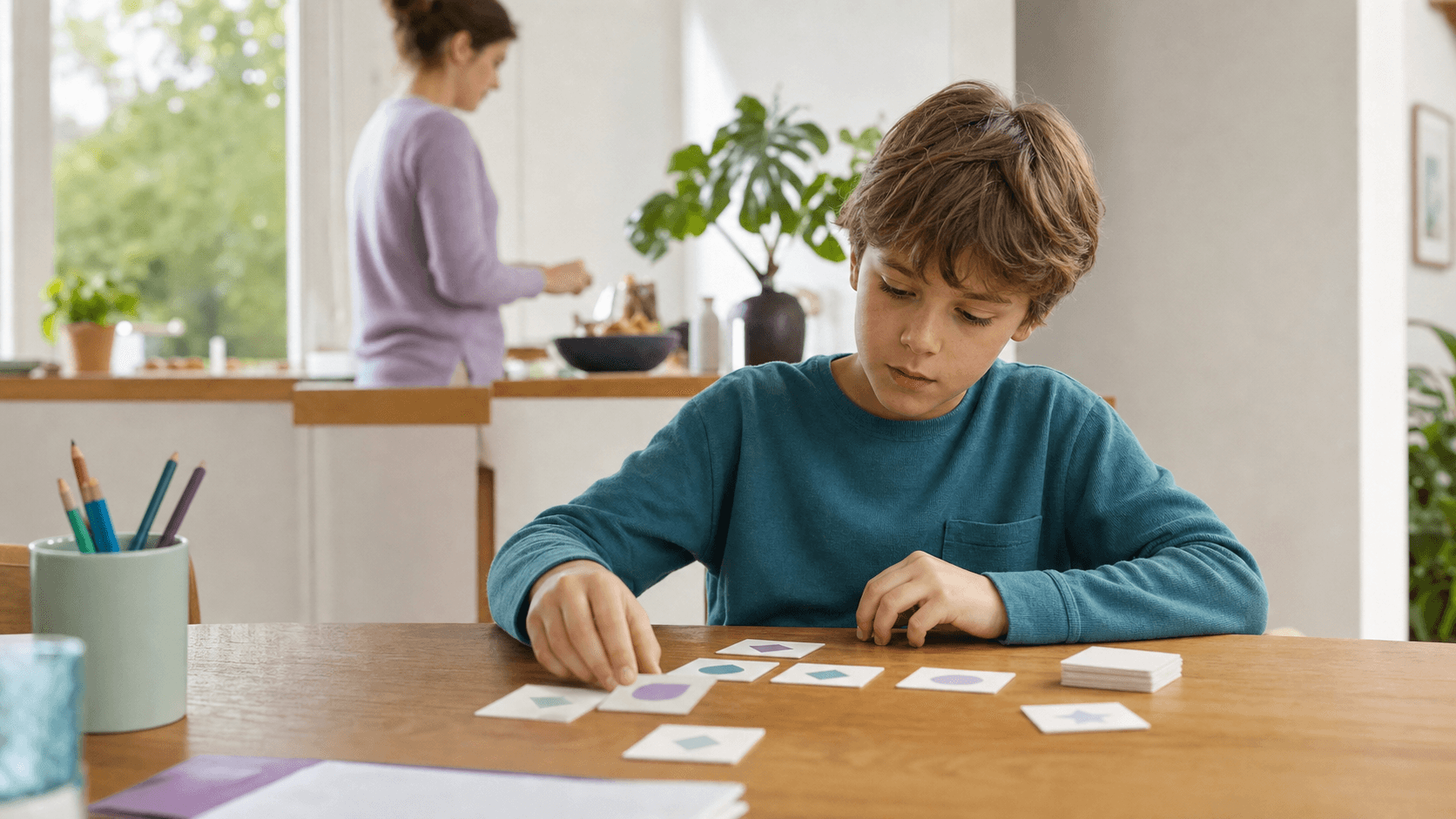
A child may lose track under a light fixture, near a window, or facing a reflective board without being able to name the discomfort. Rubbing the eyes, changing position, or avoiding copying does not alone indicate its cause. Compare seats, times, and materials, as well as understanding of instructions, sleep, and vision.
The goal of a school accommodation is to make reading, writing, or listening more accessible. Describing “He rereads better when the reflection disappears” provides more usable information than immediately attributing the behavior to a profile.
When Cereya becomes a useful next step
If light is only one part of a recurring pattern—fluctuating attention, accumulated sensory demands, adaptation effort, interaction difficulties, or a substantial need for recovery—Cereya offers an initial orientation process that is immediately accessible. Assessments help organize situations, triggers, and consequences, then explore several dimensions rather than drawing conclusions from isolated discomfort.
This overview can reveal convergences, prepare a discussion, and help choose the next step. The guide to cognitive profiles explains how several indicators can form a contrasting pattern without being reduced to one characteristic. Cereya provides orientation insights; it does not measure an ophthalmological cause or establish a diagnosis.
When to seek medical advice
Significant light sensitivity, eye pain, reduced or recently changed vision, new halos, marked redness, unusual migraines, or persistent discomfort warrant professional advice. A sudden or severe symptom should not wait through a period of self-observation.
Noting the light involved, time to onset, associated symptoms, and settings already tried will help the consultation. This medical boundary remains distinct from the functional observation offered in the rest of the guide.